

Modern skincare often encourages continual product layering: more actives, more fragrance, more exfoliation and more treatment steps. Yet the skin barrier is a biologically active interface, not a surface that benefits from constant intervention. When the barrier is already inflamed, disrupted or easily upset, reducing exposure can be more useful than adding complexity.
For Dr Watkins Essentials, “less” is not a marketing shortcut. It is a framework for formulation and routine design: fewer unnecessary irritants, more intentional ingredients, and products that support everyday skin, laundry and home-care routines without excessive chemical burden.
When Your Skin Is Asking for Less
Dry, tight, reactive or irritated skin is often interpreted as a signal to add more products. In reality, these symptoms can reflect impaired barrier function, increased transepidermal water loss and heightened inflammatory signalling. Repeated exposure to fragranced products, harsh surfactants, exfoliating acids, retinoids or incompatible occlusives may further increase irritation in susceptible skin.
In this context, “nothing” means reducing variables. A simplified routine makes it easier to identify what the skin tolerates, what it reacts to, and whether the issue is dryness, barrier disruption, dermatitis, acne, folliculitis or another condition altogether. A gentle cleanser, a well-tolerated moisturiser and targeted support only where needed can often be more rational than a multi-step routine.
When “More” Can Feed the Problem
Perioral dermatitis is a good example of why simple is sometimes best. It can appear as small, bumpy, irritated patches around the mouth, nose or chin, and it is often confused with acne, eczema or general sensitivity. Because the skin can feel dry, tight and inflamed, many people instinctively add richer creams, oils, balms, exfoliants or active serums — but for some, this can make the cycle worse.
Certain skin conditions are influenced by what is happening in the skin barrier and microbiome. Heavy occlusive products, fragranced formulas, harsh surfactants, exfoliating acids, retinoids, topical steroid creams and repeated product changes may aggravate perioral dermatitis in susceptible skin. In yeast-driven follicle conditions such as Malassezia folliculitis, also known as fungal acne, lipid-rich ingredients such as some fatty acids, esters, polysorbates and many botanical oils may contribute to flares because Malassezia yeast thrives on certain lipids.
This does not mean every oil, balm or rich cream is bad, and it does not mean every rash is bacterial or fungal. It means skin that is already inflamed may need careful observation, fewer variables and professional guidance if symptoms persist. For some people, the most supportive step is to pause the complicated routine, remove obvious irritants, and reintroduce products slowly so the skin can show what it truly tolerates.
Makeup: Coverage, Occlusion and Barrier Load
Makeup can be emotionally useful because it offers coverage and confidence, but from a skin-barrier perspective it is still another topical exposure. Foundations, concealers, primers, setting sprays and removers can introduce pigments, preservatives, fragrance compounds, waxes, silicones, oils, emulsifiers and surfactants to skin that may already be inflamed or easily upset.
In perioral dermatitis, heavy foundation or concealer layered around the mouth, chin and nose may worsen symptoms by increasing occlusion, trapping sweat and sebum, and prolonging contact with irritants. If a flare is active, a temporary pause from makeup in the affected area can be a useful part of a controlled reset. If makeup is needed, lighter, fragrance-free, non-comedogenic formulas with fewer ingredients are generally a more cautious choice than dense, long-wear or heavily fragranced products.
Application and removal matter as much as the formula. Brushes, sponges and fingers can transfer microbes and residues, while scrubbing, wipes and repeated cleansing can mechanically irritate the barrier. Clean applicators, minimal layering, gentle removal and avoiding makeup directly over active perioral bumps or folliculitis-like lesions can reduce the total inflammatory load while the skin stabilises.
The Quiet Power of Essentials
Dr Watkins Essentials products are best understood as part of a lower-intervention approach: skincare, soap, laundry and cleaning products that help minimise unnecessary exposure while supporting daily hygiene and comfort. For reactive skin types, this matters because facial skincare is only one part of the exposure picture; detergents, hand soaps, household cleaners and fragranced products can also contribute to cumulative irritation.
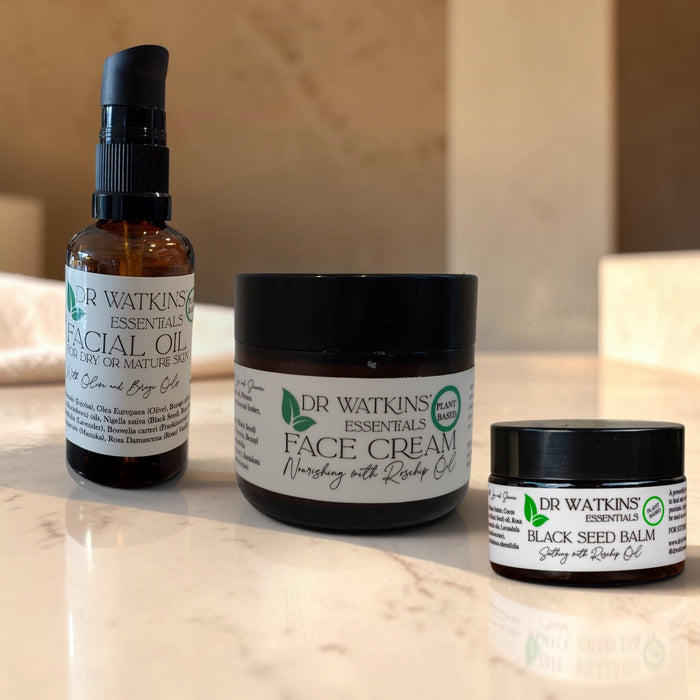
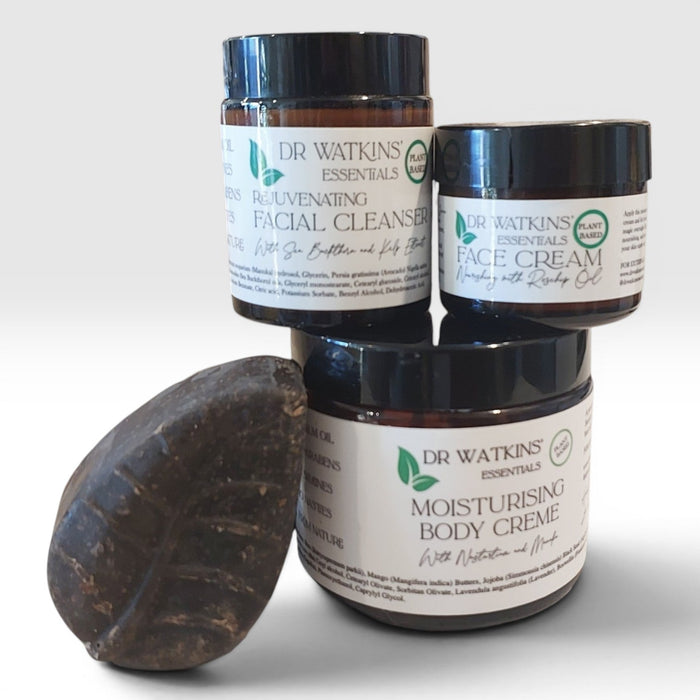
Products such as Revolutionary Black Seed Balm, Nourishing Face Cream, Rescue Cream, Body Butter, Castile Soap, soap bars, Laundry Liquid and low-tox cleaning essentials can sit within this philosophy when used thoughtfully. The aim is not to apply every product everywhere, but to choose the least complicated option that suits the skin, the body area and the condition being managed.
Nothing Is Not Neglect
Doing nothing does not mean neglecting the skin. It means avoiding unnecessary stimulation while the barrier is unsettled. In dermatology, this type of restraint is often seen in “zero therapy” approaches for perioral dermatitis, where minimising topical products can help remove triggers and allow the skin to stabilise before products are reintroduced carefully.
This approach is particularly relevant for people with sensitive skin, eczema-prone skin, acne-prone skin, perioral dermatitis, rosacea-like reactivity or folliculitis patterns. A low-tox lifestyle is not about avoiding all chemistry; all skincare is chemistry. It is about reducing avoidable irritants, limiting unnecessary exposures and choosing formulations with a clearer purpose.
A Slower Ritual for Skin and Home
For one week, consider a controlled reset. Stop non-essential actives, avoid fragranced leave-on products, reduce exfoliation, use a gentle cleanser, moisturise only with products the skin clearly tolerates, and avoid applying rich balms or oils over active perioral dermatitis or folliculitis-like bumps unless advised by a clinician. For body and household care, consider lower-irritant soap, laundry and cleaning choices, especially where fabrics or residues contact reactive skin.
Then reintroduce products slowly. Add one product at a time, observe for several days, and pay attention to location-specific reactions. Uniform itchy bumps may suggest folliculitis rather than acne. A rash clustered around the mouth, nose or eyes may need perioral dermatitis assessment. Persistent, spreading, painful or recurrent symptoms should be reviewed by a qualified health professional.
Sometimes Nothing Is the Best Thing
Sometimes nothing is the best thing because it reduces inflammatory noise. Fewer products mean fewer possible irritants, allergens, occlusives, surfactants, lipids and actives interacting with an already reactive barrier. This gives the skin a clearer environment in which to recover and gives you better information about what actually supports it.
Explore the Dr Watkins Essentials range with this principle in mind: choose deliberately, use sparingly, observe carefully and let your skin’s response guide the routine. Effective care is not always about doing more. Sometimes it is about knowing when to stop.



Leave a comment