
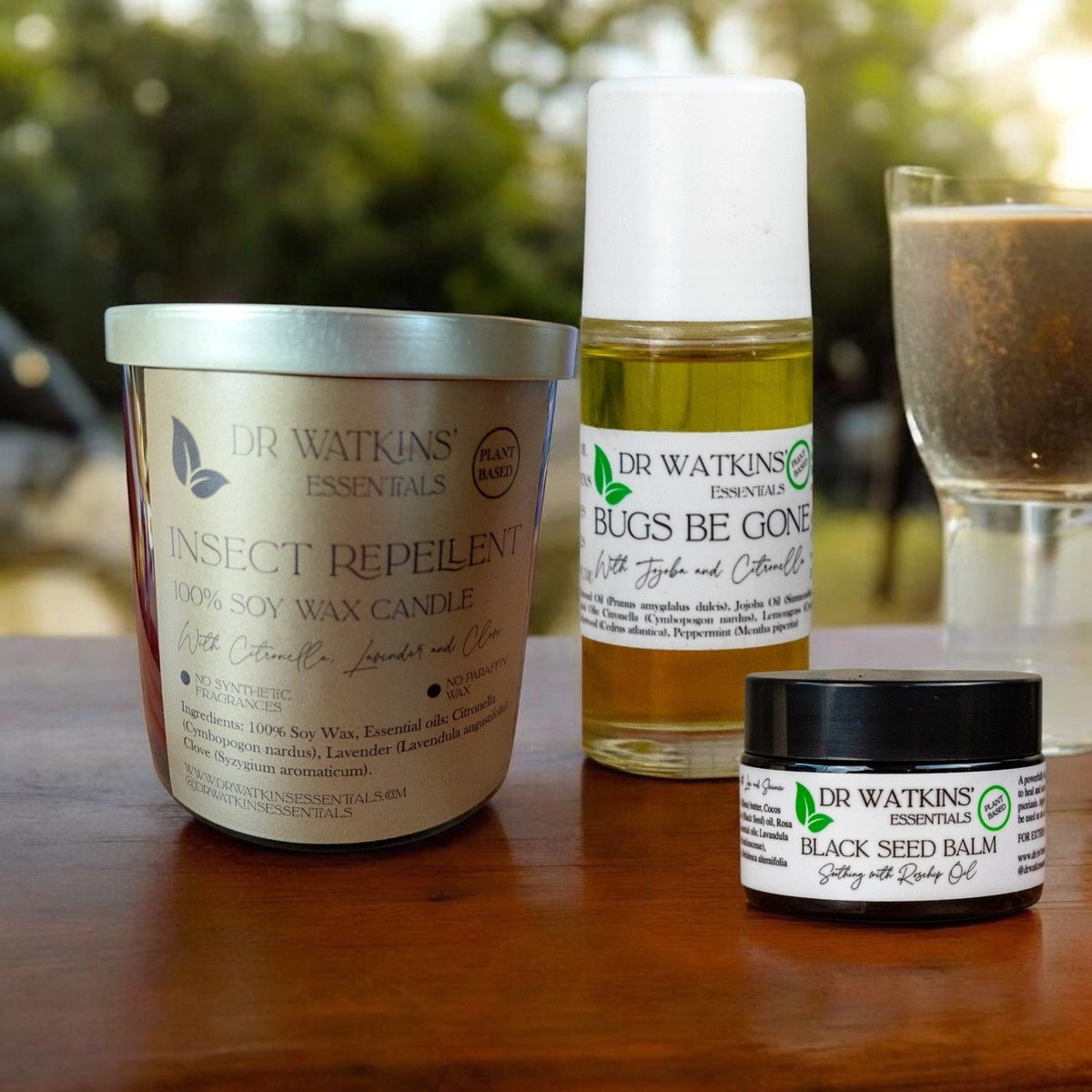
Natural protection with Dr Watkins Essentials Bugs Be Gone candles and roll-on—plus gentle after-bite care with black seed balm
Warm evenings, open windows and long meals outdoors are some of summer’s best pleasures. Unfortunately, mosquitoes and sandflies often arrive uninvited. A thoughtful natural routine can make your space less appealing to insects while keeping the atmosphere relaxed, fresh and welcoming.
Start with layers of protection
No single natural product creates an invisible shield, so prevention works best in layers. Cover exposed skin with light clothing when insects are active, use window screens where possible, remove standing water around the home and position outdoor seating away from damp or sheltered breeding areas. A gentle breeze from a fan can also make it harder for mosquitoes to land.
Set the scene with a Bugs Be Gone candle
Create a more inviting, comfortable space with the Dr Watkins Essentials Insect Repellent Candle. It turns everyday insect protection into part of the atmosphere, pairing 100% soy wax with citronella, lavender and clove essential oils. The result is a warm botanical fragrance that complements dinners, relaxed evenings and summer entertaining—an appealing alternative for anyone who prefers a plant-based option over harsh-smelling sprays.
Its real advantage is versatility: the candle can be enjoyed indoors or outdoors, from living and dining areas to decks and covered entertaining spaces. Light it before guests arrive or before you settle in, giving the essential-oil fragrance time to disperse around the area you are using. For a larger space, several well-spaced candles can help create a more consistent aromatic zone. Always follow the product label and standard candle safety: place it on a stable, heat-resistant surface, allow suitable ventilation indoors, keep the flame away from children, pets, curtains, foliage and draughts, and never leave it unattended.
Take protection with you using the Bugs Be Gone roll-on
For protection that travels with you, reach for the Dr Watkins Essentials Insect Repellent Roll On. Compact, tidy and easy to target exactly where needed, it slips effortlessly into a handbag, picnic basket or camping kit. Its botanical blend combines citronella, lemongrass, cedarwood, thyme and peppermint essential oils with skin-conditioning sweet almond, jojoba and black seed oils. It is formulated to help deter mosquitoes, sandflies, midges and other biting insects—without DEET—making it an attractive choice for people seeking convenient, plant-based protection.
The roll-on format makes application quick and fuss-free: glide it over exposed skin before walks, picnics, camping trips or evenings outdoors, then reapply as directed on the label during extended activity. Because it applies directly to the skin, there is no cloud of spray and less chance of wasting product. Avoid the eyes, mouth and broken or irritated areas, and use it alongside sunscreen rather than in place of sun protection. Patch-test before first use if your skin is sensitive, and seek professional advice before using essential-oil products during pregnancy or breastfeeding.
Essential oils with insect-repellent activity
Plants produce aromatic compounds as part of their own defence systems, and several essential oils have demonstrated insect-repellent activity in laboratory or field research. Their volatile aromas may help mask the human scents that attract biting insects or interfere with the insects’ scent-detection systems. Citronella is one of the best-known examples, while lemongrass, clove, peppermint, cedarwood, thyme and lavender have also shown useful activity in some formulations. This botanical variety is one reason the layered essential-oil blends in the Bugs Be Gone candle and roll-on are so appealing: each ingredient contributes its own aromatic profile to a broader repellent strategy.
Performance depends on the insect species, oil concentration, product format and environmental conditions. Because essential oils evaporate readily, their protection can be shorter and more variable than longer-lasting conventional repellents; a carefully formulated product and timely reapplication are therefore important. Choose a finished product designed for its stated use rather than applying undiluted essential oils directly to the skin, follow the label, and patch-test topical products if you are sensitive. Where insect-borne disease is a concern, follow local public-health advice and use a repellent recommended for that level of risk.
Why some people prefer a DEET-free option
DEET is a well-established repellent that can provide reliable, long-lasting protection, and major public-health authorities consider registered products safe when they are used according to the label. Even so, it is not everyone’s preferred choice. Some people dislike its characteristic smell or the feel it leaves on the skin, and occasional irritation can occur—particularly with excessive application, higher concentrations or use on sensitive or damaged skin.
DEET can also affect certain plastics and synthetic materials, so care may be needed around items such as some glasses frames, watch straps, phone cases and outdoor gear. Spray formats may be less appealing indoors or when precise, low-mess application is wanted. These practical considerations help explain the appeal of the DEET-free Bugs Be Gone roll-on and candle for everyday use. However, plant-based repellents may offer shorter or more variable protection, so in places where mosquitoes or ticks spread disease, choose a repellent recommended by local public-health authorities and prioritise proven protection over ingredient preference.
When a bite still happens: calm, don’t scratch
Even careful preparation cannot prevent every bite. Wash the area gently, then apply a cool compress for 10–15 minutes. Try not to scratch: broken skin increases irritation and the risk of infection. This is where an after-bite balm can become a useful comfort step.
Black seed balm as soothing after-bite care
When a bite needs gentle attention, black seed balm is a comforting addition to the home or travel kit. Black seed oil, pressed from Nigella sativa seeds, contains moisturising fatty acids and thymoquinone, a naturally occurring compound that has demonstrated anti-inflammatory and antihistamine activity in research. These properties may help explain why black seed preparations are valued for soothing itchy, irritated-feeling skin. The balm format is easy to apply precisely where needed, helping condition the skin and offering a soothing finishing step after cleansing and cooling a small, uncomplicated bite. Apply a thin layer according to the product directions and treat it as supportive skin care—not as a proven cure or a replacement for medical treatment.
Its appeal lies in that simple, nourishing approach: a small amount is easy to keep close at hand whenever skin needs extra care. Research into black seed for skin conditions is promising but still limited, and specific evidence for insect bites is not established. “Natural” also does not mean risk-free: topical black seed oil has occasionally been linked to contact dermatitis and, rarely, more serious skin reactions. Patch-test a new balm on a small area first, avoid the eyes and broken skin, and stop using it if redness, swelling, blistering or discomfort worsens.
Know when to seek help
Get medical advice if a bite becomes increasingly painful, hot, swollen or weepy, or if redness spreads. Seek urgent help for difficulty breathing, dizziness, facial or throat swelling, widespread hives or other signs of a severe allergic reaction. Children, pregnant people and anyone with highly sensitive skin should check product directions carefully and ask a healthcare professional if unsure.





Leave a comment